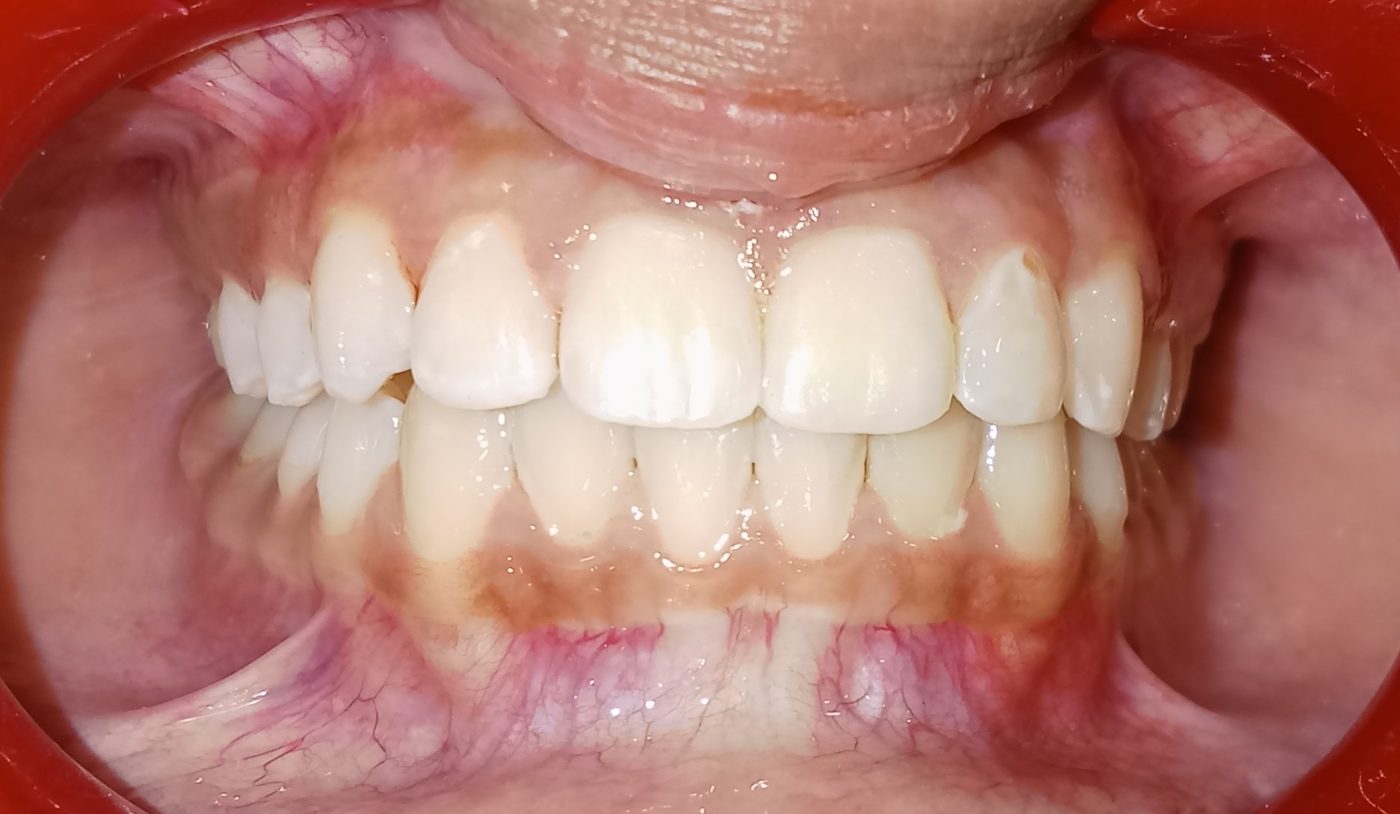
More than half the patients who message me on WhatsApp asking about braces or Invisalign are adults — and almost all of them open with a version of the same question: "Am I too old for this?" In my practice, age is just a number. If the supporting bone is healthy and strong, I treat the case to resolve whatever's actually bothering the patient — I've successfully treated patients well into their 50s. Orthodontic treatment works the same way at 55 as it does at 15 — teeth move through bone in response to gentle, sustained pressure, and that biology doesn't have an expiry date.
What's genuinely different for adults isn't whether treatment works — it's what needs checking first, which options fit a working professional's life, and what realistic timelines look like. Here's the honest version.
What's Actually Different About Treating Adults
Two things get checked more carefully in adults than in teenagers, and both are routine:
- Gum and bone health. Adults are more likely to have some gum recession or early bone loss, especially if it's been years since a proper dental check-up. Moving teeth through compromised bone isn't safe, so a periodontal check comes first — most patients pass it without issue, and any gum treatment needed is usually straightforward.
- Speed of movement. Adult bone remodels slightly more slowly than a still-growing teenager's, since there's no active growth to work with. In practice this rarely changes the overall plan much — case complexity matters far more than age.
Everything else — how predictably teeth respond, how stable the final result is with proper retention — is no different from treating a teenager. Once the bone health check is clear, age itself isn't a factor in whether or how I plan treatment — I go by the case in front of me and what the patient actually wants fixed.
In My Experience
Adult patients are usually the easiest to treat in one specific way: compliance. You're paying for this yourself, on your own schedule, because you actually want it — so aligners get worn on time and appointments don't get missed. That consistency often matters more to the outcome than age does. I've treated patients well into their 50s — crowding, bite corrections, the full range — with the same predictable results as a much younger patient, because the biology holds up just as well when the bone is healthy.
Your Options as a Working Adult
You're not limited to metal brackets. Most adults in Doha choose based on how visible they're willing for treatment to be day-to-day:
Invisalign / Clear Aligners
- The most popular choice for professionals — clear, removable for meetings and meals
- No metal, no dietary restrictions
- Fewer in-person adjustment visits than fixed braces
- Requires discipline: 20–22 hours a day of wear to stay on track
Ceramic or Lingual Braces
- Fixed, so there's no reliance on remembering to wear anything
- Ceramic brackets blend with tooth colour; lingual sits behind the teeth, fully hidden
- Better suited to complex bite corrections that need more control
- See our lingual braces vs Invisalign comparison for the full picture
Common Concerns Adult Patients Raise
- "Will people notice at work?" — Invisalign is genuinely hard to spot across a meeting table. Ceramic braces are more visible but still far less obvious than metal.
- "Will my teeth just shift back afterward?" — Only if retainers are skipped. Every adult case finishes with a retention plan — see our guide to retainer types.
- "Can I see what my results will look like before I commit?" — Yes, this is standard practice now. Read how the digital smile design process plans and previews your case before treatment even begins.
- "I also want whiter teeth / veneers — can that happen too?" — Yes. The usual order is straighten first, then whiten or add cosmetic work once teeth are in their final position — see our whitening after braces guide.
The only real way to know your own timeline and the right option for your bite is a proper assessment. Message on WhatsApp or book a consultation, and we'll walk through what's realistic for your case specifically — no guessing, no upselling.