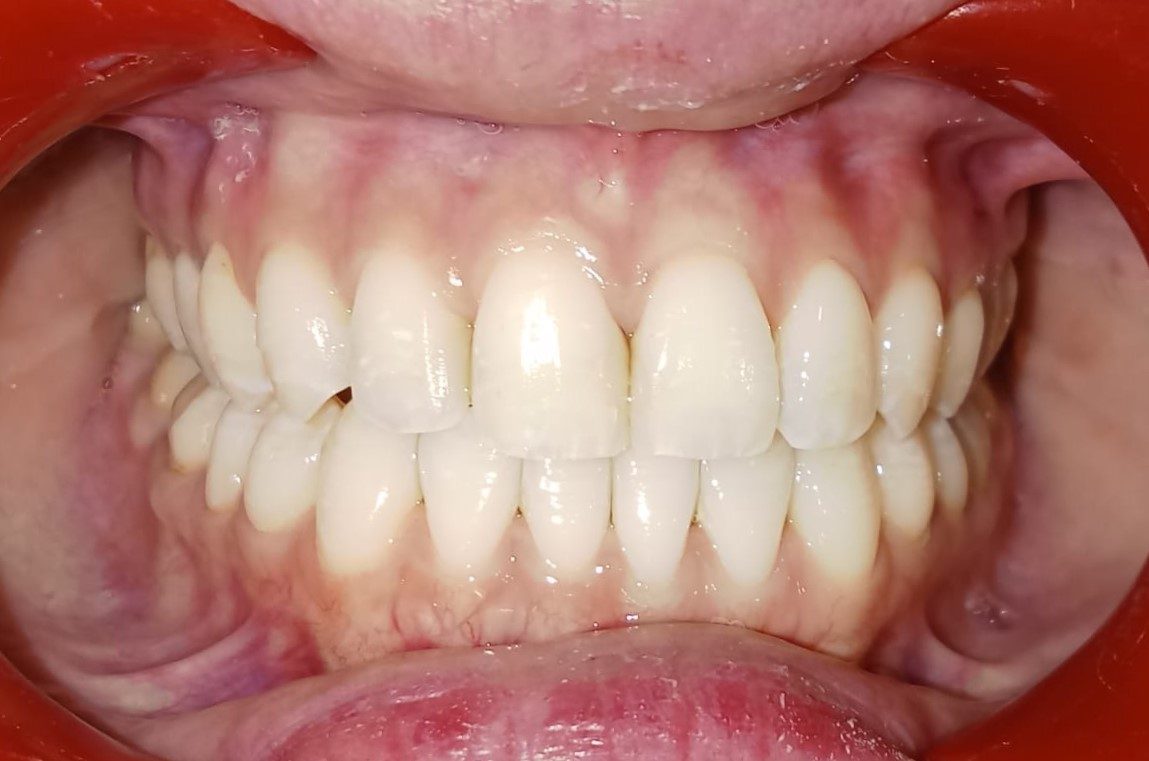
For Invisalign and other premium clear-aligner cases, treatment starts the same way every time: not with a tray of putty, but with a digital scan. Digital smile design is the planning stage where your entire aligner treatment is mapped out and simulated on a computer before a single aligner is made. Here's exactly what happens, step by step.
-
The 3D Digital Scan
A small handheld scanner is moved around your mouth for a few minutes, capturing a precise 3D digital model of every tooth surface and your bite. No trays, no goopy impression material — just a scan. This model is the foundation everything else is built on.
-
Treatment Simulation
Using that 3D model, planning software maps out how each tooth needs to move, stage by stage, from your current position to the final result. For Invisalign cases, this is what generates your ClinCheck preview — you can literally watch your smile change on screen before treatment starts. Read more in our guide to seeing your results before you begin.
-
Reviewing the Plan Together
Before anything is fabricated, we go through the simulation together. This is where you can ask questions, flag concerns, and understand exactly what to expect — including realistic treatment time. It's also where any restorative goals (whitening, veneers) get sequenced into the plan properly.
-
Fabrication
Once the plan is approved, it's sent for fabrication — a full series of custom aligners printed in sequence, staged exactly the way the simulation mapped it out. (Lingual braces follow a different, lab-based fabrication process instead of this digital-scan workflow — see how the two compare in our lingual braces vs Invisalign guide.)
-
Fit Checks & Monitoring
Digital planning doesn't replace in-person care — it makes it more predictable. You'll still have periodic check-ins so we can confirm teeth are tracking the simulated plan, and make small adjustments if biology doesn't move in perfectly straight lines (it rarely does).
Why It Matters
The honest value of digital smile design isn't the "wow" of seeing an animation — it's predictability. You get to see the plan and ask questions before committing to it, and I get a precise, tooth-by-tooth roadmap instead of guessing as we go. Fewer surprises for both of us.
What Digital Planning Doesn't Do
It's worth being upfront about the limits, too:
- It's a highly accurate projection, not a guarantee — teeth are biological, not mechanical, and your orthodontist may adjust the plan mid-treatment if needed.
- It doesn't remove the need for in-person check-ups — monitoring is still how we catch anything drifting off-plan early.
- A polished simulation is only as good as the treatment judgment behind it — the software plans movements, it doesn't decide whether a case needs extraction, surgery referral, or a different approach entirely. That's still a specialist's call.
Curious what your own case would look like simulated? Message on WhatsApp or book a consultation — the scan takes a few minutes, and it's the first real step toward seeing your own treatment plan.