Two friends finish orthodontic treatment the same month. One walks out with a thin wire glued behind their front teeth. The other gets a clear plastic tray to wear at night. Naturally, the question comes up: "Wait — why did I get a different retainer than you?"
It's one of the most common questions I get after treatment, and the honest answer is simple: your retainer isn't random. It's chosen for your teeth, specifically. Here's exactly how that decision gets made — and why copying a friend's retainer choice could actually undo your results.
Why Doesn't Everyone Get the Same Retainer?
Braces and aligners move teeth into a new position. But the bone and gum tissue around each tooth need time — often months — to fully mature and lock that position in. Until then, teeth want to drift back toward where they started. This is called relapse, and different teeth relapse in different ways.
A retainer's job is to block that specific relapse pattern. A tooth that was badly rotated needs different support than a gap that was closed, or a bite that was deepened. That's why the "best" retainer isn't one type — it's whichever type matches what your teeth are trying to do.
Which Retainer Might You Get?
Here's a simplified, patient-friendly breakdown of how orthodontists typically match retainer types to common situations:
| Your Situation | Likely Retainer | Why This One |
|---|---|---|
| Teeth were removed to create space, and that space was closed | Wraparound retainer | Holds the closed spaces firmly without pressing on the areas where teeth were removed |
| Your bite was too deep (top teeth covering the bottom too much) | Hawley retainer with a bite plane | Stops the deep bite from returning and lets back teeth settle naturally |
| Your bite was open (front teeth don't touch when you bite down) | Bonded retainer + Hawley | Extra control to keep the bite closed evenly |
| Front teeth were twisted or rotated | Fixed (bonded) retainer | Rotated teeth are the most likely of all to twist back |
| A gap between teeth was closed | Fixed bonded retainer | Stops the gap from reopening |
| Your arch was widened | Wraparound retainer | Keeps the wider arch stable without interfering with your bite |
| Braces were just removed | Hawley retainer | Lets your back teeth settle naturally into a comfortable bite |
| You finished clear aligner treatment | Vacuum-formed (Essix) retainer | Holds teeth in the exact position your aligners finished at |
| Lower front teeth were badly crowded | Bonded lingual retainer | Lower front teeth are one of the most common relapse spots |
| You had treatment as an adult | Fixed retainer, sometimes plus a removable one | Adult bone and gums settle less, so long-term stability matters more |
| An underbite was corrected without jaw surgery | Fixed + removable retainer | These cases have a higher tendency to relapse |
| Your gum support is weaker than average | Essix retainer | Gently splints teeth together for support, with a natural look |
Note: this table reflects Dr. AJ's own clinical preferences and general patterns, not a universal rulebook — other orthodontists may reasonably choose differently. Please consult your own orthodontist for your specific retainer choice.
Dr. AJ's Honest Take
I get asked to switch a patient to whatever retainer a friend or sibling got. I understand the instinct, but the answer is usually no — and it's not stubbornness. The retainer that protected their result might do nothing for yours, or worse, allow the exact relapse it needs to prevent.
The Most Common Retainer Types, Explained Simply
What is a Hawley retainer?
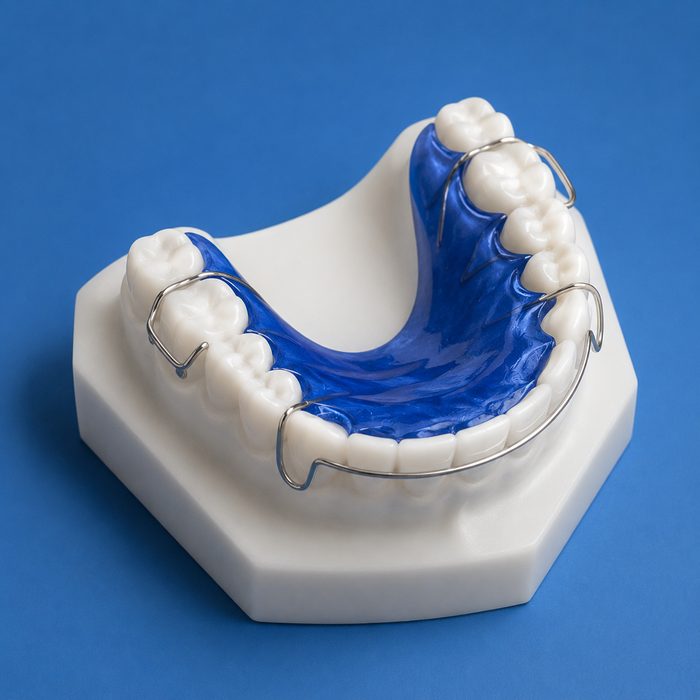
A removable retainer with a plastic base that sits against the roof of your mouth or under your tongue, held in place by a thin metal wire across the front teeth. It's adjustable, durable, and lets your back teeth settle into a natural bite.
What is an Essix (vacuum-formed) retainer?
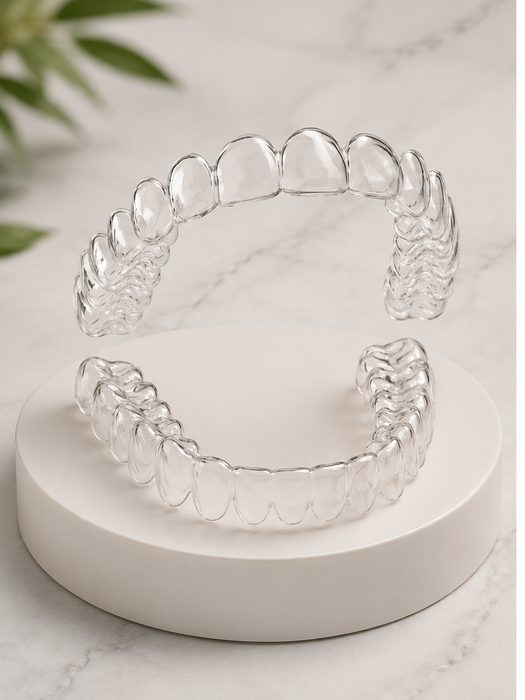
A clear plastic tray that fits snugly over all your teeth, similar to a clear aligner. It's nearly invisible and holds teeth firmly in one exact position — which is why it's commonly used right after aligner treatment.
What is a fixed (bonded) retainer?
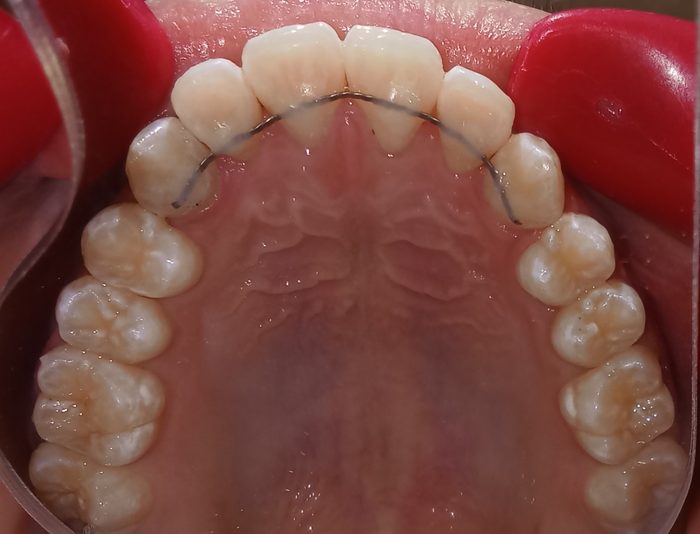
A thin wire glued directly behind your front teeth, usually top or bottom, or both. It works 24/7 with nothing to remember, which makes it the strongest option for teeth with a high tendency to shift back — like rotated teeth or closed gaps.
What is a wraparound retainer?
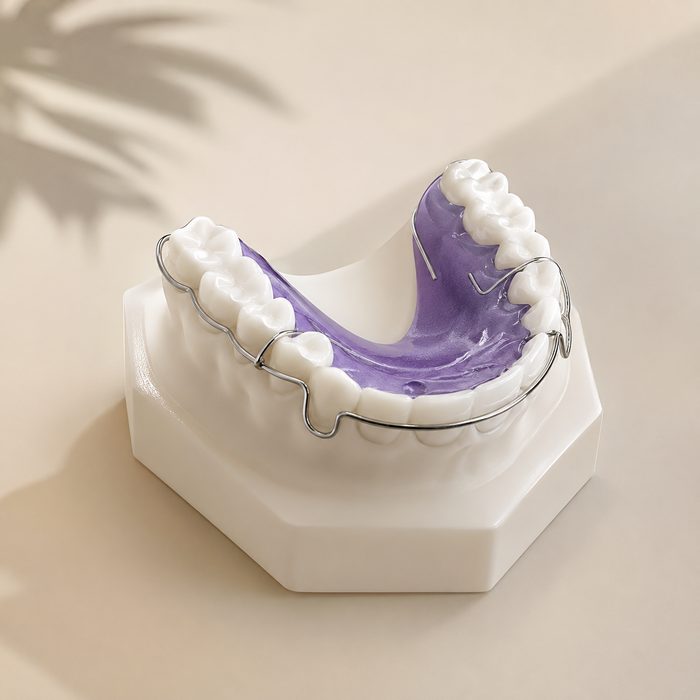
A removable retainer that wraps around the outside of your back teeth as well as the front, giving wider support. It's often used after cases involving extractions or arch expansion.
Why the Wrong Retainer (or No Retainer) Undoes Your Results
Braces and aligners can take a year or more. Relapse can happen in a matter of months if retention is skipped or the wrong type is worn. The teeth that moved the most, and the ones that were rotated or badly crowded, are usually the first to move back — often before you'd even notice in the mirror.
This is why the retainer conversation isn't a formality at the end of treatment. It's arguably as important as the treatment itself.
Dr. AJ's Honest Take
I'd rather give a patient a retainer that feels like "more than they expected" than watch months of treatment quietly undo itself over a year. If your retainer looks different from a friend's, that's not an inconsistency — it means it was actually chosen for your teeth.
A Friendly Note From Dr. AJ
If it were entirely up to me, I'd give every patient dual retention — a fixed retainer plus a removable one to back it up. Fixed wires can debond without you noticing, and having a removable retainer as a safety net means your teeth are never left unprotected in the meantime. Even just wearing it at night is genuinely worth the small effort.
If you're unsure why you have the retainer you do, or whether you're wearing it correctly, that's always worth asking about directly rather than guessing. The patterns above reflect one orthodontist's clinical approach — please consult your own orthodontist for the retainer that's right for you.

