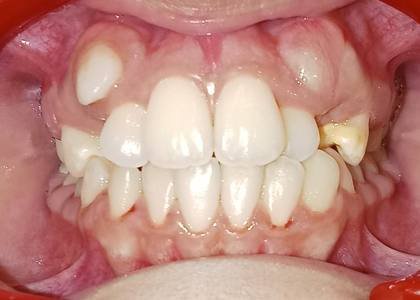
Protruding Upper Jaw — Corrected Without Surgery
Forwardly placed upper jaw • Surgery avoided • 2 anchor screws • 4 premolars extracted • Fixed bracesWhat is it?
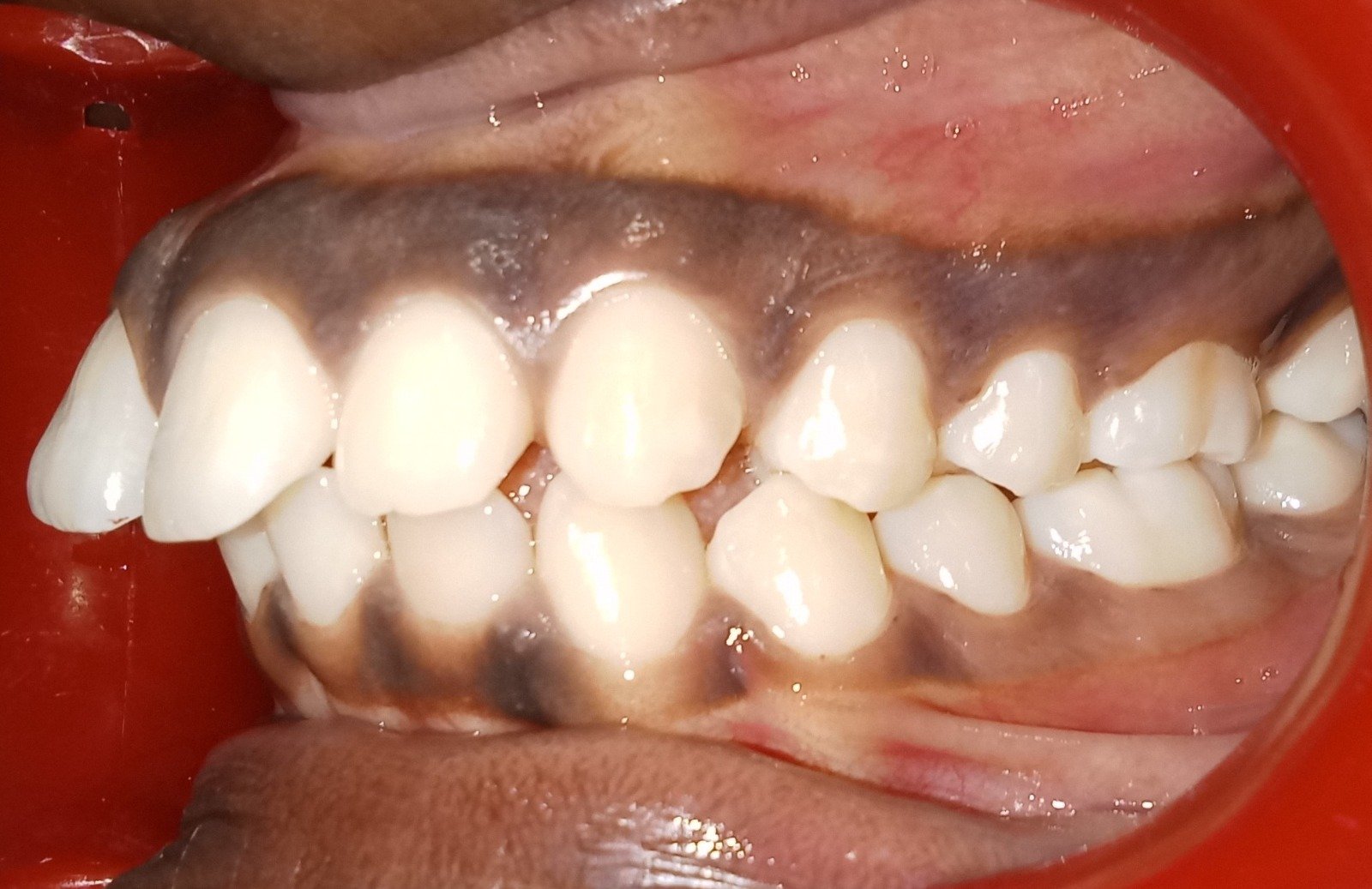
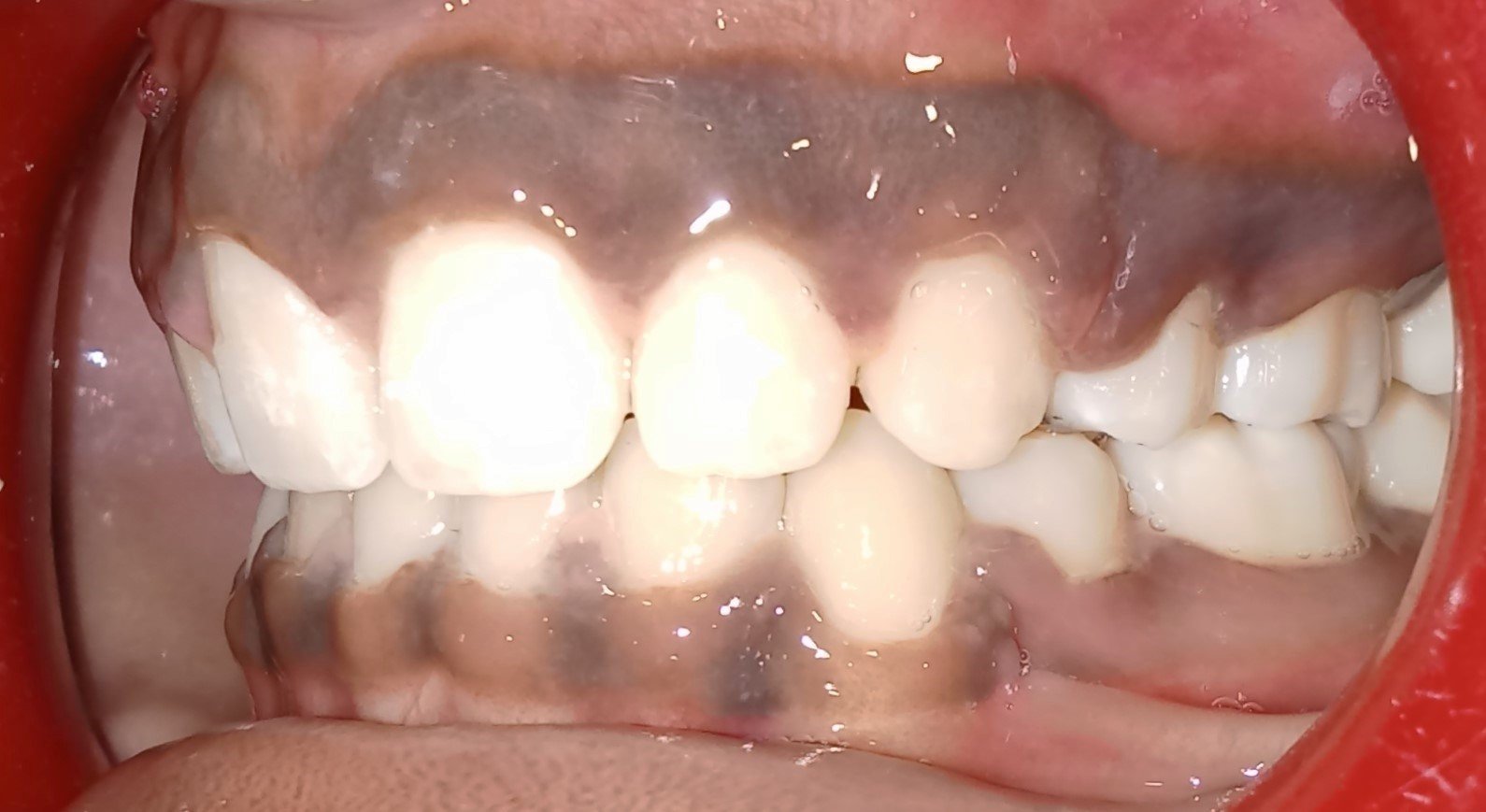
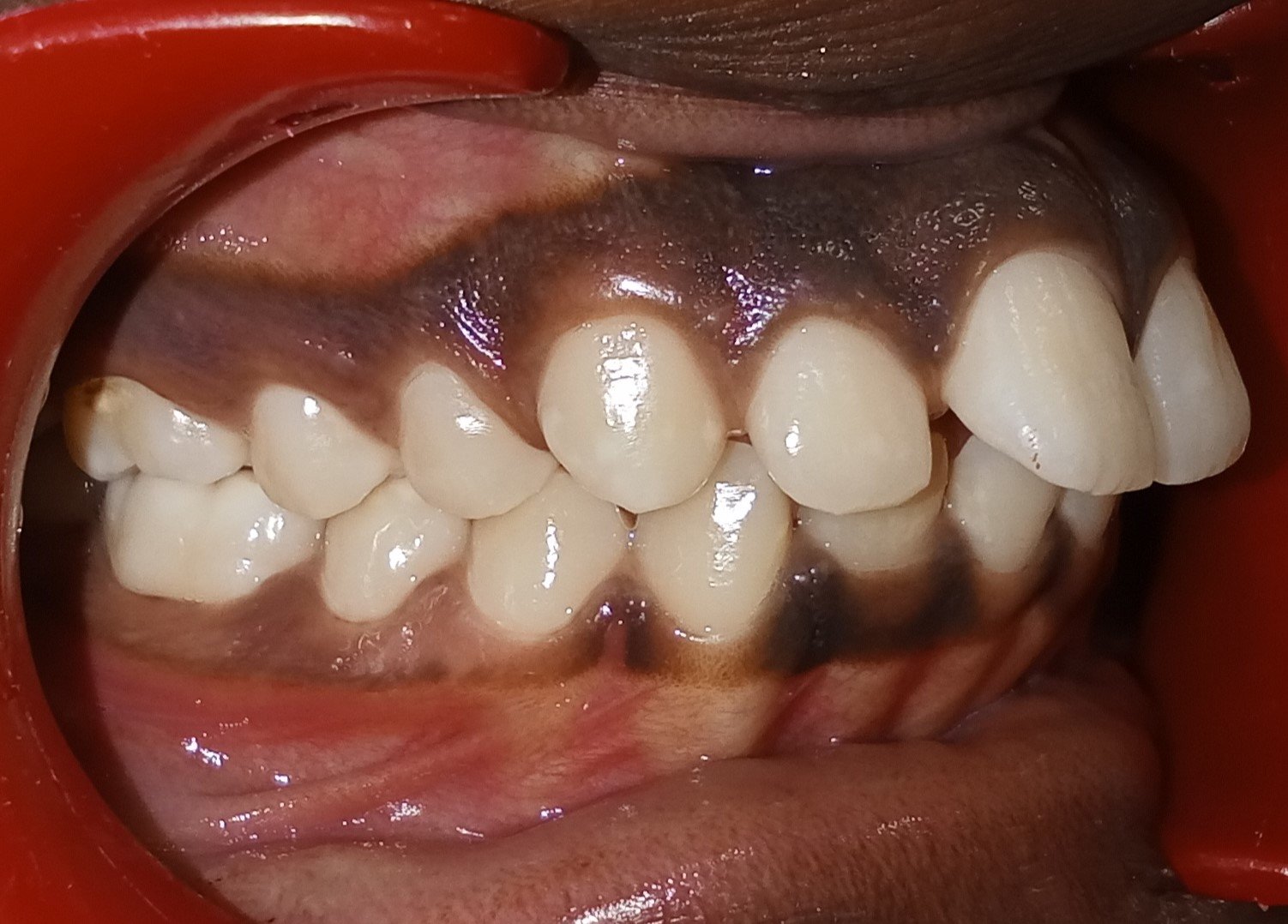
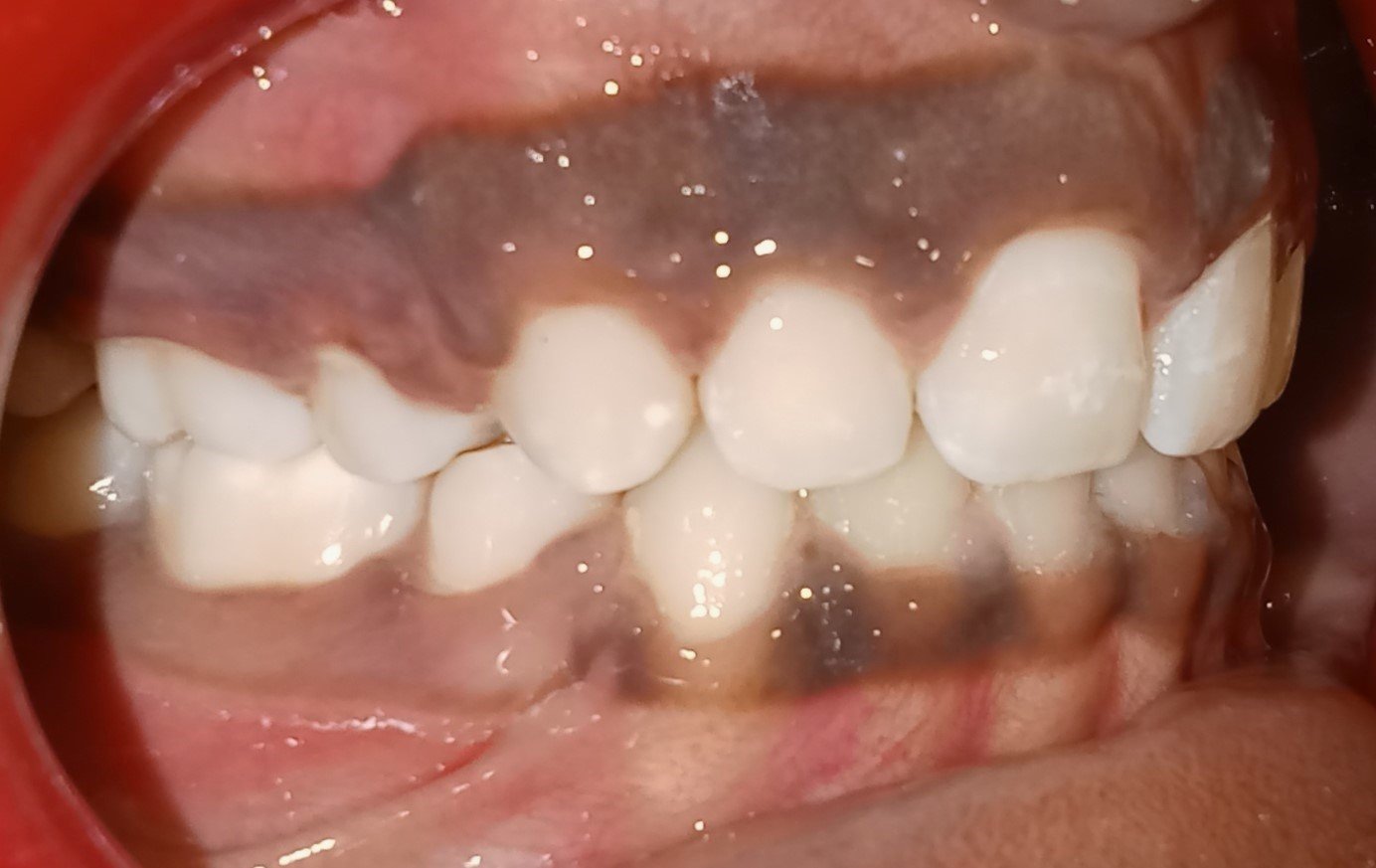
In this case, the patient's bite (the way the teeth meet) was actually well matched — but the upper jaw bone itself sat further forward than the lower jaw bone, giving a more prominent upper jaw profile. Cases like this are usually corrected with jaw surgery. The patient preferred to avoid surgery, so we used a non-surgical approach instead: special small anchor screws placed in the jaw bone gave us strong support, premolars were removed to create room, and braces gently pulled the front teeth back to balance and disguise the jaw difference — a technique called dental camouflage.
How we treat it:
- Full records — X-rays, photos & 3D jaw analysis
- 2 anchor screws placed for extra support (no surgery)
- Extraction of 4 premolars — upper & lower, both sides — to create space
- Fixed braces to retract the front teeth and balance the profile
- Dual retention — fixed retainer upper & lower, plus a clear retainer worn while sleeping
- Gum contouring (gingivoplasty) — advised for final aesthetics, optional, pending
Front View
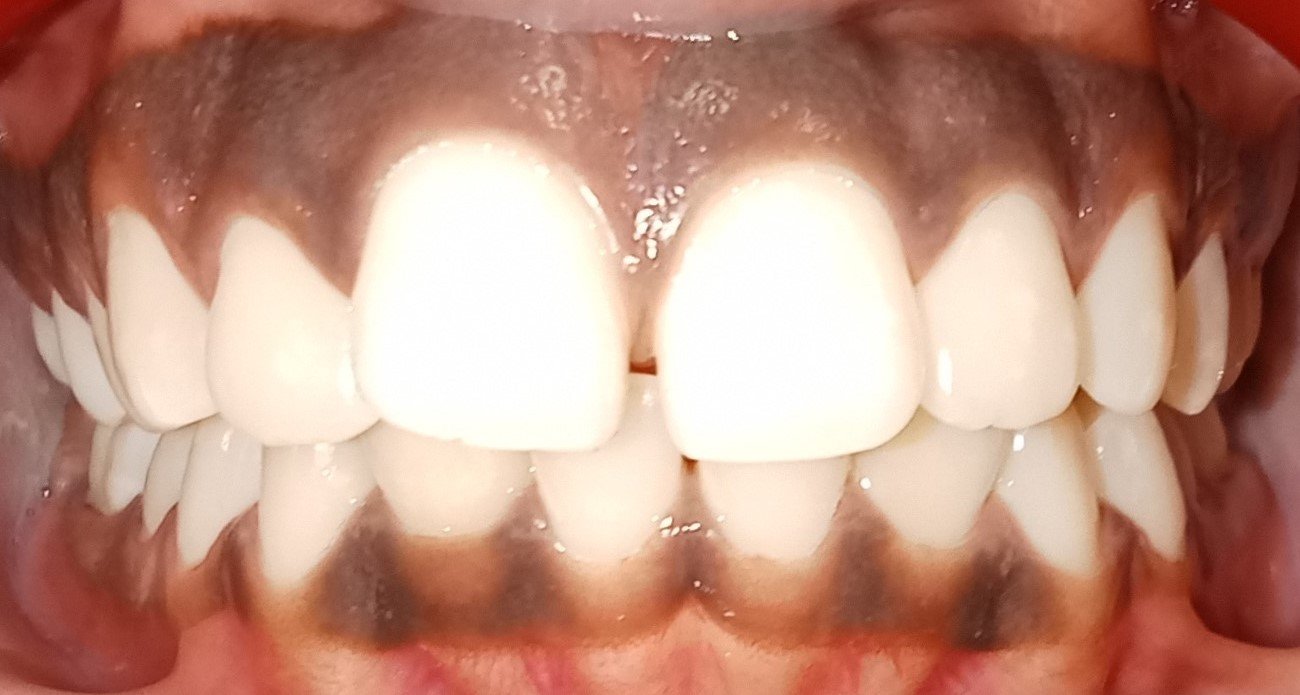
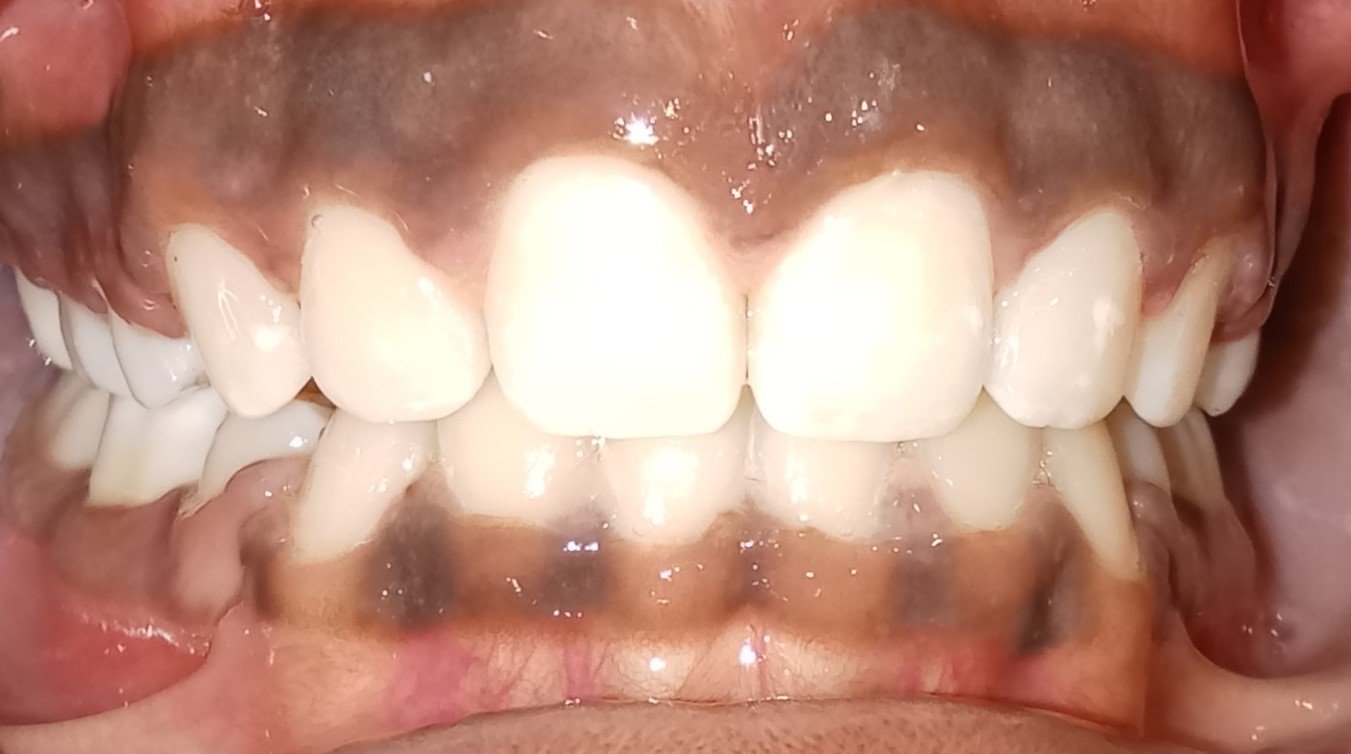
Left Side
Right Side
X-Ray Before & After Comparison
This side-by-side X-ray comparison shows the real story behind the new smile — how much the front teeth angulation changed, top and bottom, once the jaw difference was corrected without surgery.
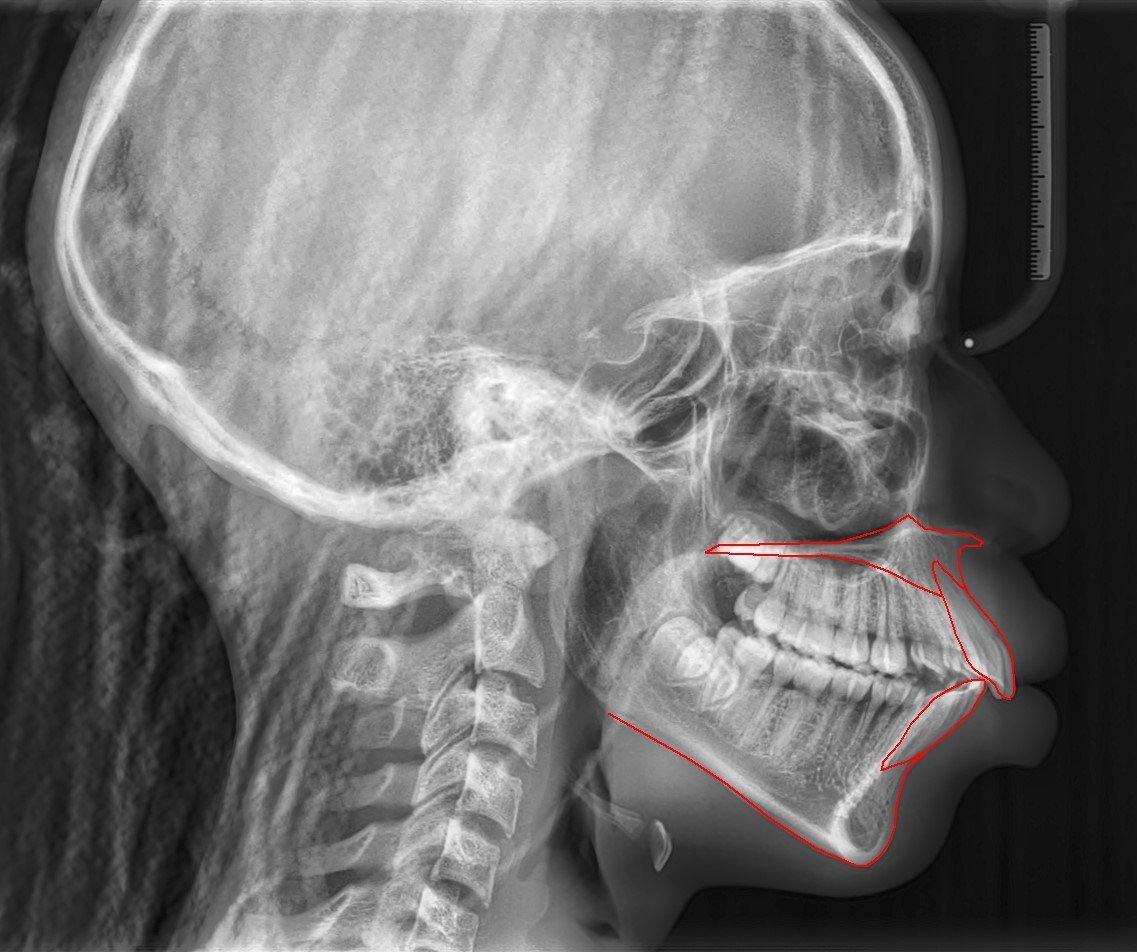
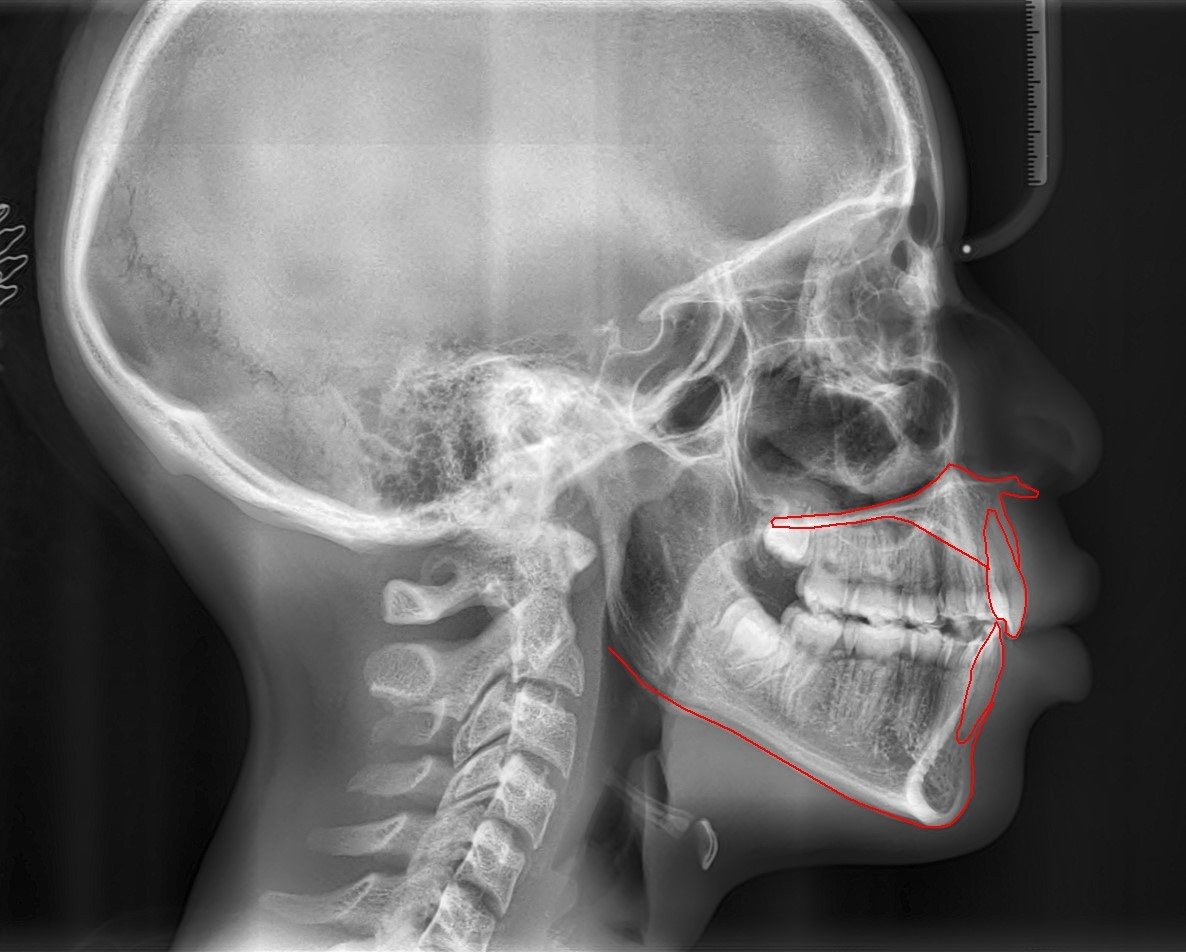
Notice how the upper and lower front teeth have been brought back to a more upright, balanced angle — this is what actually creates the improved profile and smile, not just the visible teeth alignment.
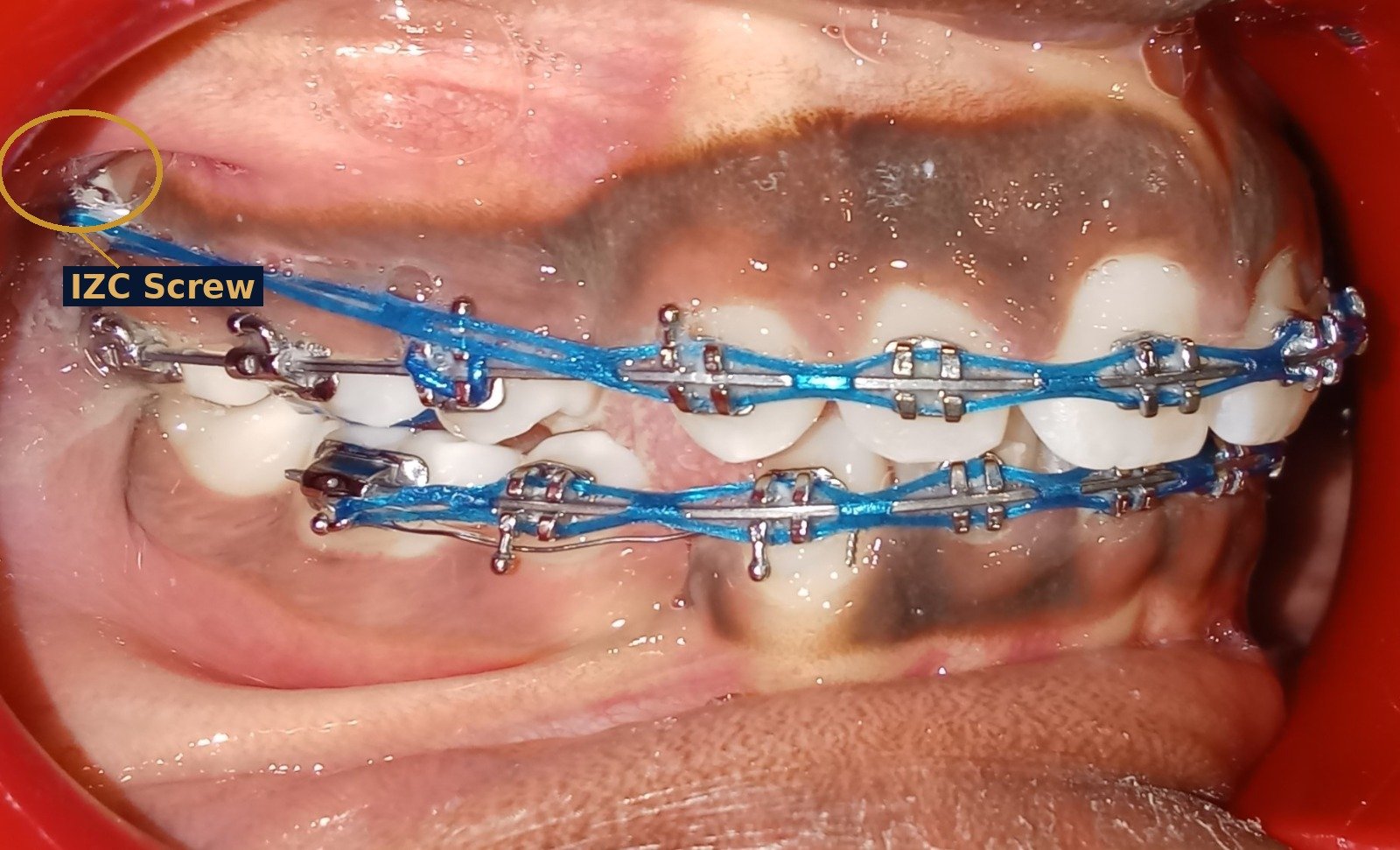
The Anchor Screw Behind the Result
This is the small anchor screw (an IZC screw) that made surgery-free correction possible. Placed quietly in the gum and bone, it gave the braces extra, fixed support to pull the front teeth back firmly — strength that braces alone couldn't provide. It stayed in place through treatment and was removed once the correction was complete.
A Note From Dr. Ajay
Gum contouring (gingivoplasty) was advised at the end of treatment to refine the gum line and lift the final smile aesthetics even further. The patient chose to hold off on this for now and may revisit it later. The results you see here are without that final step — a good reminder that even great results often have a little more room to be even better.